
Open shelving has become one of the most popular design features in modern kitchens—and for good reason. It’s practical, visually impactful, and helps even the smallest kitchens feel bigger and more open. But styling your shelves so they look intentional (not cluttered) can feel intimidating.
The good news is that creating beautifully styled open shelves is much easier than it looks. With the right mix of everyday items, textures, and simple design principles, your shelves can look like they were styled by an interior designer.
Below are 25 ideas to help you style kitchen open shelving with confidence, using pieces you already own or simple upgrades that make a big difference.
1. Start with a Clean, Neutral Base
Before adding decor, remove everything and begin with a blank slate. Neutrals such as white, wood, glass, and ceramic always create a cohesive foundation.
2. Keep Everyday Items Within Reach
Display plates, bowls, mugs, and glasses you actually use. Open shelves work best when they’re both beautiful and functional.
3. Mix Wood and Glass for Warmth
Combining wood tones with clear glass adds balance—warm, organic texture paired with clean, transparent lines.
4. Use Cutting Boards as Vertical Anchors
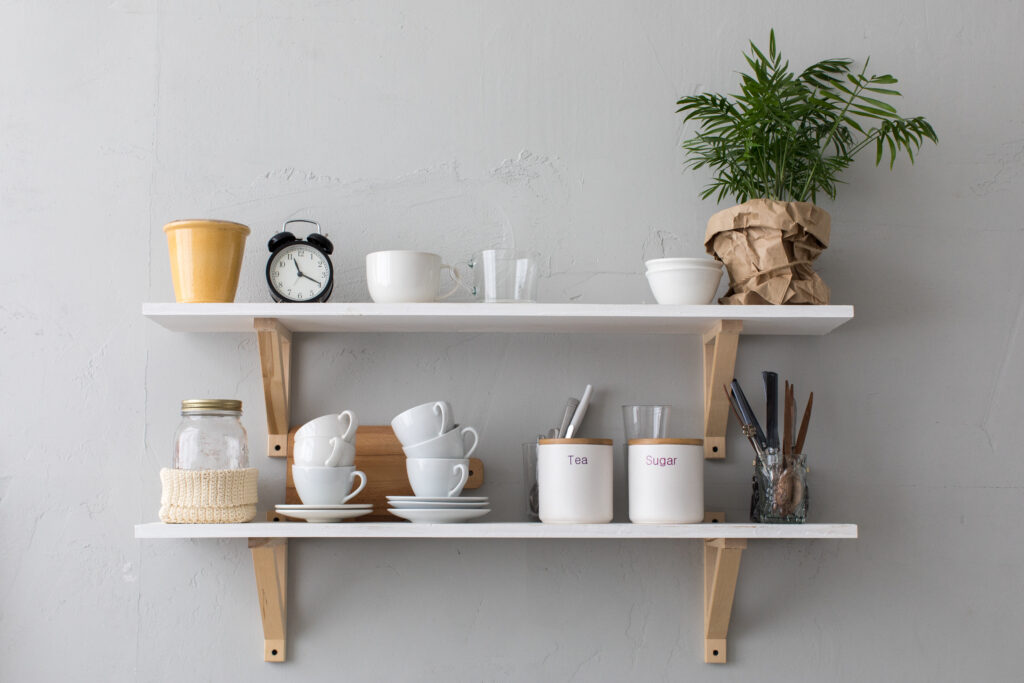
Prop large cutting boards or charcuterie boards against the wall. They create height and add a designer-level look with minimal effort.
5. Incorporate a Few Decorative Items
A small vase, sculptural bowl, or candle can add personality without overwhelming the space.
6. Choose a Minimal Color Palette
Limiting your shelf decor to two or three main colors makes the entire kitchen feel more elevated and cohesive.

7. Stack Dishes Neatly
Stacked dishes add structure and visual weight. Keep the stacks short and uniform for a clean look.
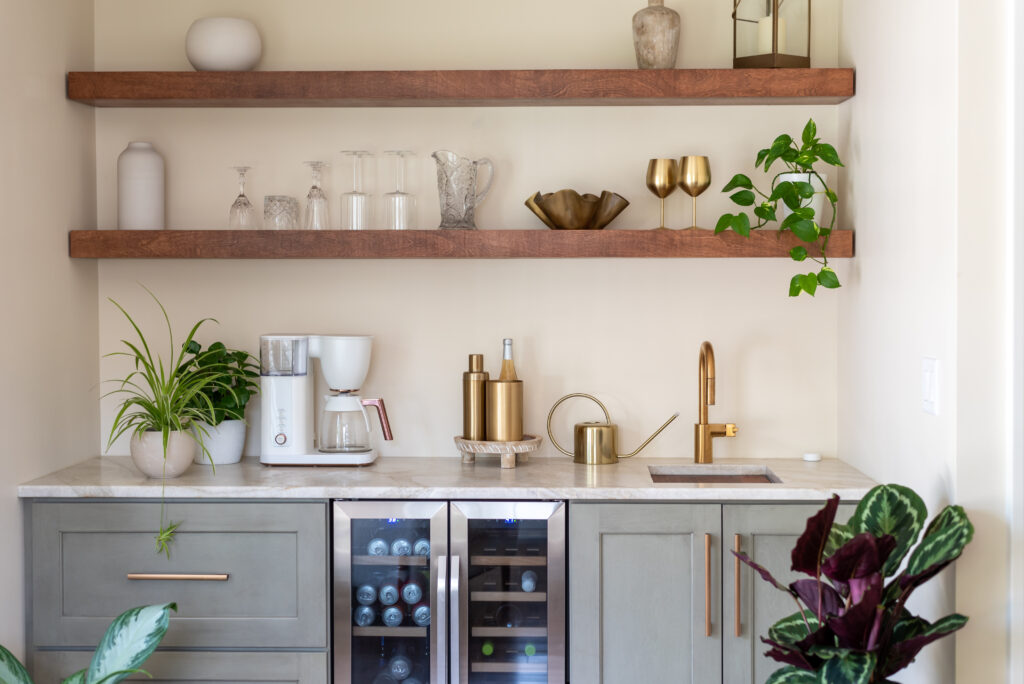
8. Display Matching Glassware
Repeating glassware pieces—wine glasses, tumblers, canisters—immediately creates a curated look.
9. Use Cookbooks as Functional Decor
Cookbooks add color, texture, and height variation. Use just a few to avoid overcrowding.
10. Add Greenery for Freshness
A small plant or a stem of eucalyptus instantly brings life and movement to the shelves.
11. Balance Open Space and Filled Space
Not every inch needs something on it. Intentionally leaving empty space makes the entire arrangement feel more thoughtful.
12. Use Containers for Dry Goods
Glass jars with matching lids look clean and modern while keeping pantry staples within reach.
13. Display Favorite Mugs or Ceramics
Choose pieces with interesting shapes, matte finishes, or handcrafted textures for a designer touch.

Shop the Look
Re-create this open shelving look with simple, functional pieces that blend seamlessly into any kitchen style.

- Large Wood Cutting Board
Amazon: https://amzn.to/4ircrBY - Small Wood Cutting Board
Amazon: https://amzn.to/487JIwY - Clear Glass Tumblers (Set of 4)
Amazon: https://amzn.to/4ilt0z7 - Glass Jar with Wood Lid
Amazon: https://amzn.to/48mLwmd - White Ceramic Mugs (Set of 4)
Amazon: https://amzn.to/4prTYHt - Stackable White Bowls
Amazon: https://amzn.to/3MliL1A
14. Mix Heights Strategically
Place tall items (boards, vases, pitchers) toward the back and shorter pieces in front to create depth.
15. Layer Items for Visual Interest
Overlap a cutting board with a bowl or layer plates behind a decorative object to prevent flat, one-dimensional styling.
16. Use Trays to Ground Small Items
A tray or low basket keeps smaller items visually grouped and prevents a cluttered look.
17. Add Metal Accents
Brass, gold, and black metals pair well with wood and ceramics, adding contrast and sophistication.
18. Create Symmetry Without Making It Too Perfect
Balance the left and right shelves with similar visual weights, but avoid matching items exactly.
19. Add Texture for Warmth
Woven baskets, linen napkins, or ribbed glass jars add tactile appeal and break up smooth surfaces.
20. Change Decor Seasonally
Swap greenery, ceramics, or accent pieces to transition your shelves for fall, holidays, spring, or summer.
21. Use Everyday Spices as Decor
Uniform spice jars can look high-end and accessible when stored neatly on open shelves.

22. Repeat Materials for Cohesion
Using the same type of wood, color palette, or glass style creates unity from shelf to shelf.
23. Keep Lower Shelves the Most Functional
Store the items you use daily on lower shelves and place less frequently used items on higher ones.
24. Add a Sculptural Element
A unique vase, pedestal bowl, or modern pitcher adds artistry and draws the eye.
25. Step Back and Edit
Once you’ve styled your shelves, take a step back. Remove one or two items if the shelves feel crowded. Simple is almost always stronger in open-shelf styling.
Final Thoughts
Designing beautiful open shelving is all about balance—between function and aesthetics, texture and negative space, variety and simplicity. With a few intentional styling choices, your shelves can look polished, curated, and completely in harmony with your kitchen.
If you want to shop the pieces used in these looks, explore my curated open shelving collection here: How to Style Kitchen Open Shelves Like a Designer